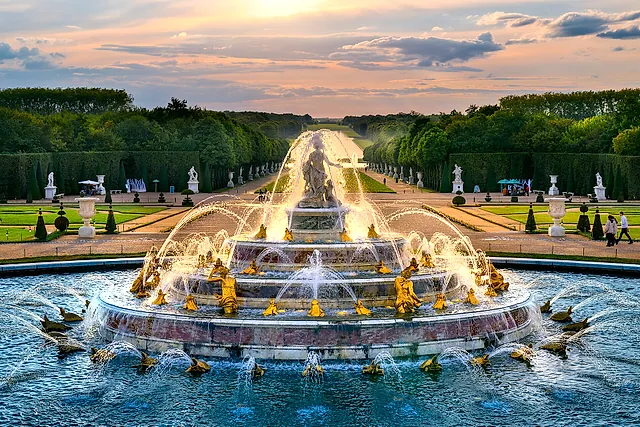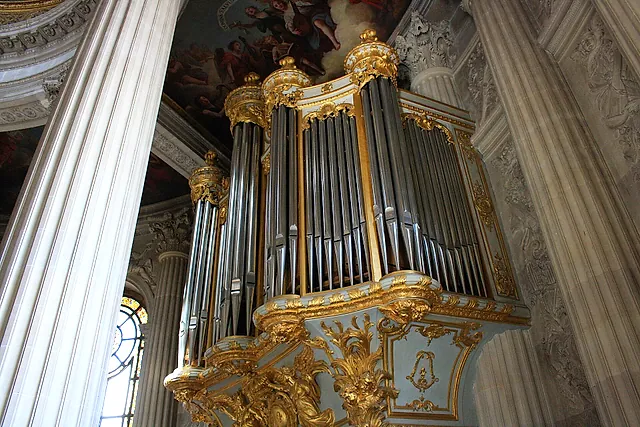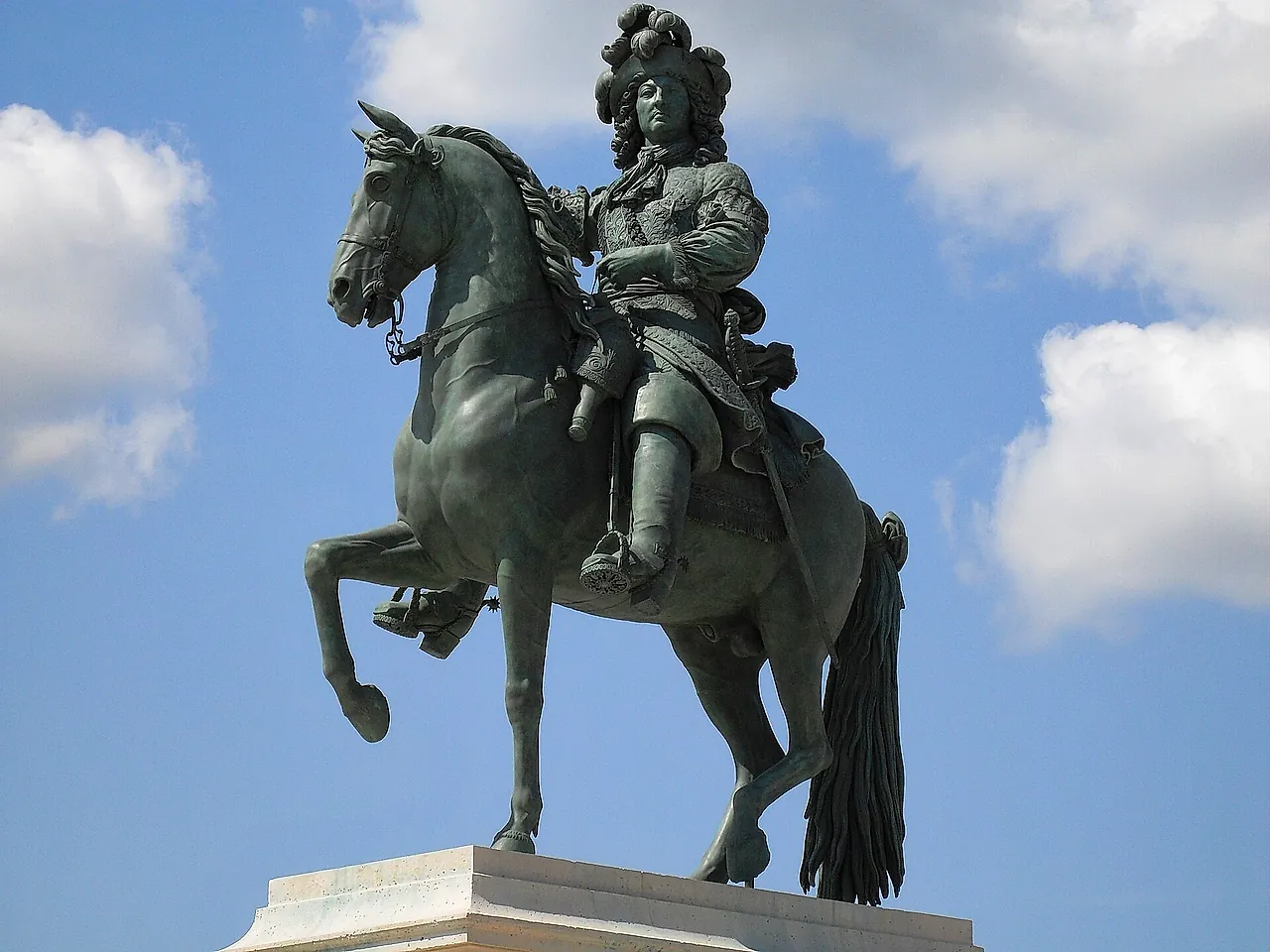
In short. Versailles began as a hunting lodge in 1623 and became the home of the French court in 1682. The kings left in October 1789, and the palace is now a museum that you can walk through room by room.
Secure your spot
Palace of Versailles: Entry Ticket + Gardens + Estate of Trianon
4.4· 13,355 reviews
from €22
Book tickets and tours →A hunting lodge in the marshes
In 1623 Louis XIII built a small lodge of red brick and white stone on a hill, in a wooded and marshy place about 19 kilometres from Paris. He came here to hunt. The courtiers were not impressed: they joked that it was a “house of cards”. Between 1631 and 1634 the architect Philibert Le Roy replaced it with a small château. When Louis XIII died in 1643, the château was left empty.
A party that changed everything
On 17 August 1661 the young Louis XIV was a guest at a dazzling festival at Vaux-le-Vicomte, the château of his finance minister Nicolas Fouquet. The king saw the house and the gardens, and he did not forget them. Fouquet was arrested a few weeks later. The king hired the three men behind Vaux for himself: the architect Louis Le Vau, the garden designer André Le Nôtre and the painter Charles Le Brun.
The first big party at Versailles came in May 1664. It lasted a week, with entertainments in the new gardens, and so many guests that many of them had to sleep in their carriages. The king understood that he needed more rooms, and a lot more.
The palace of the Sun King
From 1668 to 1671 Le Vau wrapped a new stone shell around the château of the king’s father. Then, from 1678, Jules Hardouin-Mansart took over as the king’s first architect. Wars slowed the money down, but the building went on for decades: wings for the court, the stables, the Orangery, the chapel.
On 6 May 1682 the king, the court and the government moved to Versailles. The nobles came with them, to live near the king and to look for favours. It was a way to keep them close, and under his eye.
The Hall of Mirrors
The great gallery was built on the site of a terrace, from 1678 and through the 1680s. Hardouin-Mansart designed it and Le Brun painted the vault, with 30 scenes about the first years of the king’s reign. Facing 17 windows are 578 mirrors, a luxury in those days. The gallery was furnished with solid silver tables, but in 1689 the king had them melted down to pay for a war.
In this room many events of French history took place. On 18 January 1871 the German Empire was proclaimed here, and on 28 June 1919 the Treaty of Versailles was signed, which ended the First World War.
Louis XV and Louis XVI
Louis XIV died at Versailles on 1 September 1715. His successors did not build a new palace, but they changed the rooms. The Royal Chapel was finished in 1710, and in 1770 the Royal Opera opened for the wedding of the future Louis XVI and Marie Antoinette. It was built almost entirely of wood, to be ready in time. At Christmas 1763 a seven-year-old boy called Wolfgang Amadeus Mozart played in front of the king and his family.
Away from the court, the Trianon estate offered a quieter life. The Petit Trianon was built by Ange-Jacques Gabriel in the 1760s, and in 1774 Louis XVI gave it to his young queen. Marie Antoinette changed the gardens, built a theatre in 1780 and, from 1783, the Hameau de la Reine: a little village with a mill and a dairy. It looks like a stage set, but it was a real farm that sent fruit and vegetables to the royal table.
In 1783 Versailles also saw diplomacy: on 4 September France and Spain signed the treaties with Britain that ended the war of American independence.
October 1789
On 5 October 1789, thousands of people marched from Paris to Versailles to protest about the price and scarcity of bread. They surrounded the palace. The next day the king and his family went back with the crowd to Paris. They never came back to Versailles.
Sold, saved, and made a museum
The palace was closed. Between August 1793 and August 1794 its furniture, mirrors and kitchen equipment were sold at auction in 17,000 lots, and the royal emblems were chiselled from the walls. The paintings and sculptures were sent to the Louvre.
In 1830 Louis Philippe decided to give Versailles a new purpose: a museum “to all the glories of France”. The Museum of the History of France was inaugurated on 30 June 1837, and its biggest room, the Hall of Battles, is still there. Restoration began in the 20th century, helped by a gift from John D. Rockefeller Jr. between 1925 and 1928. The Hall of Mirrors was restored again and finished in 2006. In 1979 Versailles was added to the UNESCO World Heritage List.
See it for yourself
Now you know the story, so the rooms will make sense. Start with the Hall of Mirrors and the King’s bedchamber, then go on to the gardens and the Trianon: our guide to what to see at Versailles puts them in order. A ticket for the palace, gardens and Trianon covers the whole day, and the visit tips help you plan it. If you want the stories told on the spot, choose a guided tour on the Versailles page.